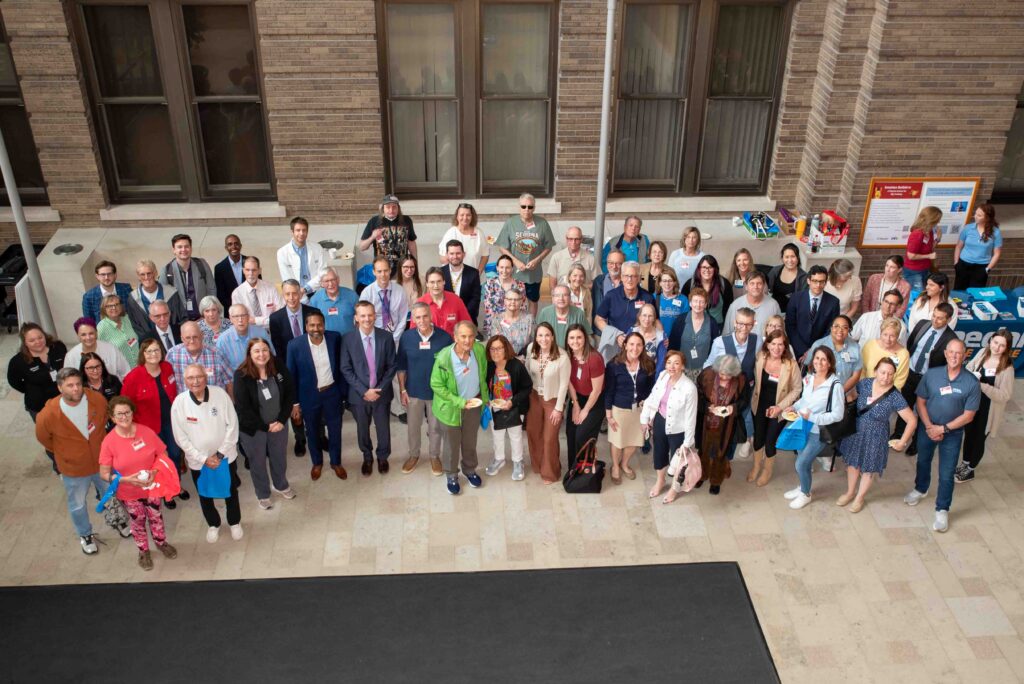
A symposium for head and neck cancer survivors marked the final affair of the Spector Lectureship – a day-long series of events highlighting advances in patient care and research in head and neck cancer.
The event was hosted on the medical school campus by Siteman Cancer Center and WashU Medicine Otolaryngology and moderated by head and neck surgeon Jason Rich, MD.
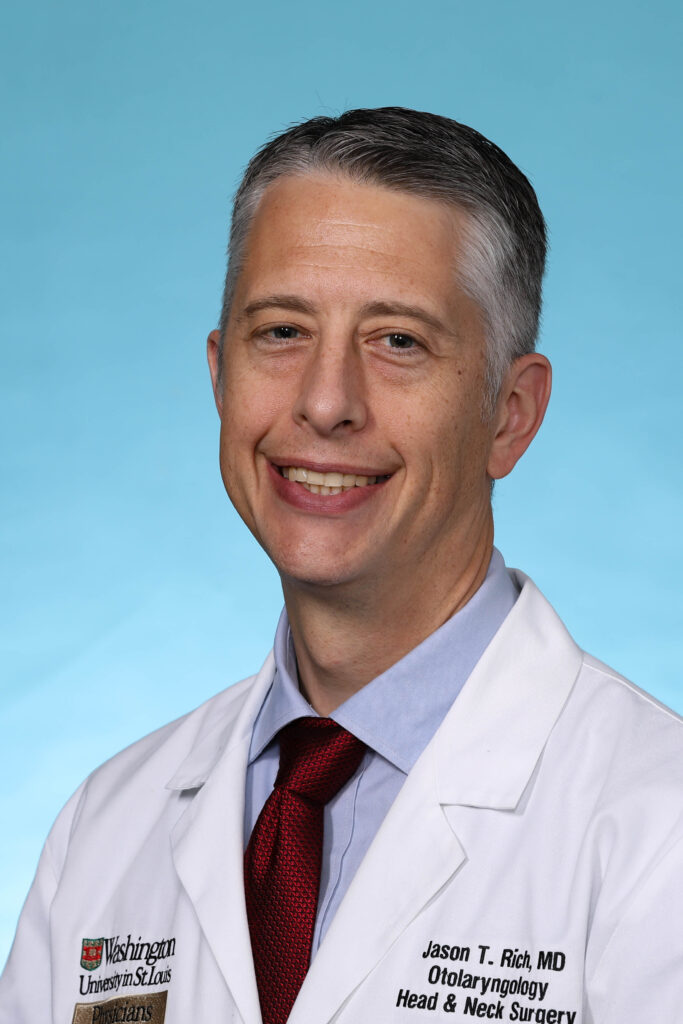
Fellow head and neck surgeon Ryan Jackson, MD, provided updates on the Rob Ebert and Greg Stubblefield Head and Neck Cancer Center. The Center – about to navigate it’s 1000th patient – has seen growth in its catchment area; development of new patient information materials; and has most importantly, documented improvements in patient care.
The invited guest speaker was renowned Thomas Jefferson University surgeon/scientist and Division Chief of Head and Neck Surgery Joseph Curry, MD. Curry shared insights from his work on achieving a better understanding of cardiovascular health in head and neck cancer patients.
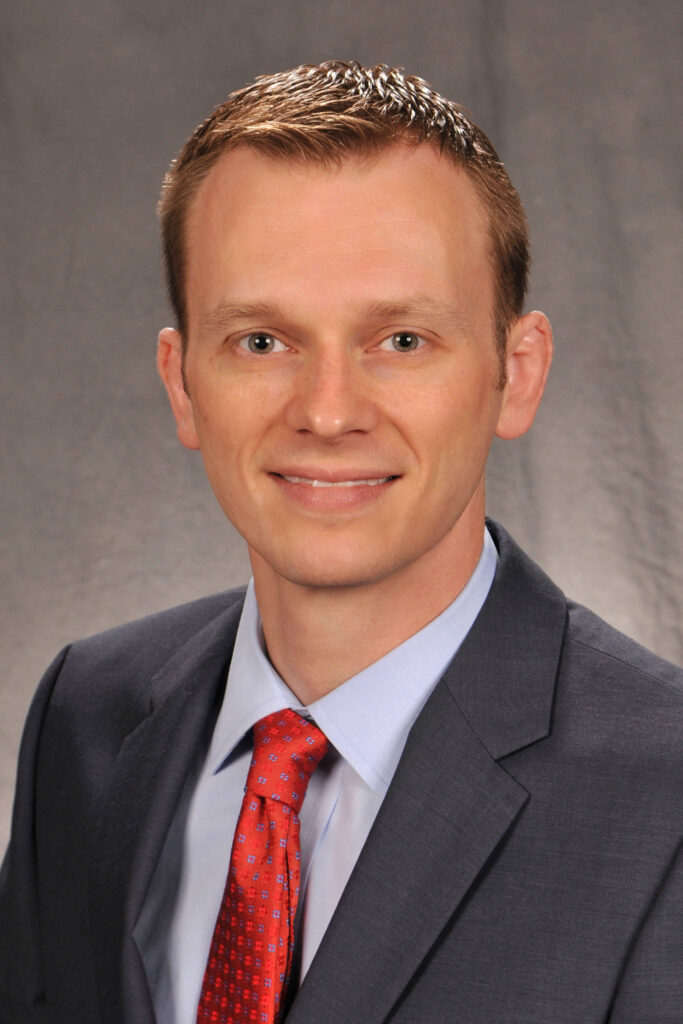
According to Curry, how and when to screen for cardiovascular health is not well understood by the head and neck surgery profession. He noted that both radiation and chemotherapy can lead to arteriosclerosis and other vessel damage, and that risk increases over time.
“A routine chest CT scan can identify coronary artery calcification,” Curry said. “But, head and neck surgeons need help from vascular professionals for proper diagnosis.”
Curry also offered advice to survivors that positive changes in lifestyle, like smoking cessation, can definitely reduce the likelihood of cardiovascular disease in head and neck cancer patients.
According to Lindburg Professor and Chair Sid Puram, MD, PhD, the survivorship symposium capped a tremendous day of events.
“The expansion of the Spector Lectureship into a full day event with resident/fellow case conference, research symposium, and survivorship symposium is truly remarkable,” he said. “In just a few years, this event has emerged as the flagship academic day for our Head and Neck Tumor Center — bringing together people from across campus who share important interests and passion for head and neck cancer care. This year’s event featured numerous speakers and diverse topics that highlight the continued growth and evolution of our program. I could not be more proud of our team and the continued desire to find new cures for our patients and this terrible disease.”