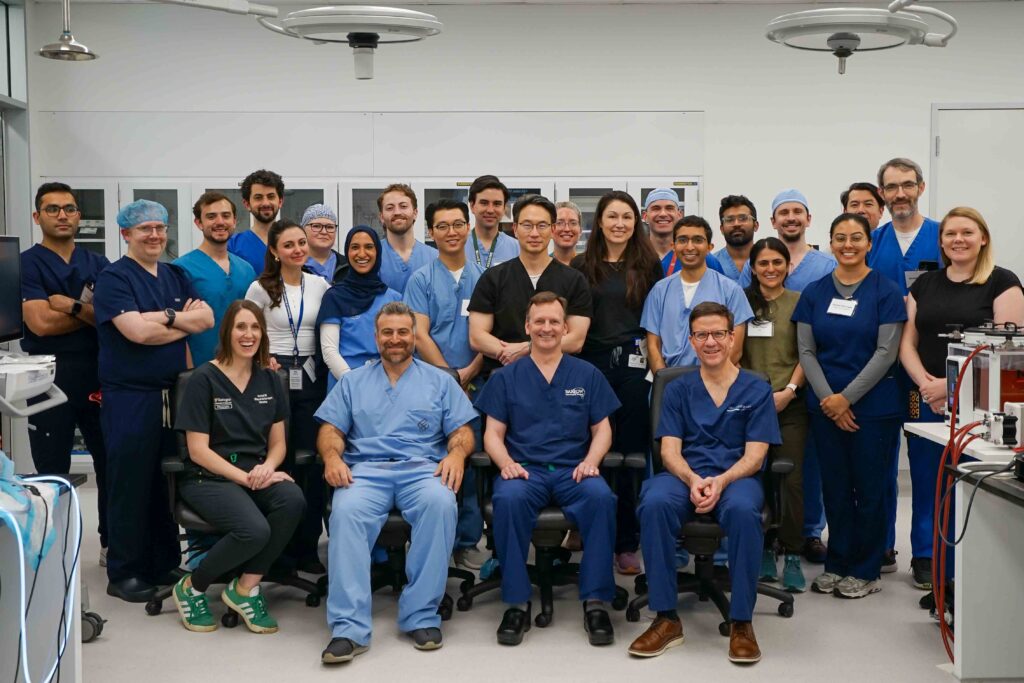
Residents in Neurosurgery and Otolaryngology at WashU Medicine – along with nine invited residents from across the Midwest – practiced open and endoscopic surgical approaches to the anterior skull base at their annual course, Saturday, May 30.
Neurosurgeons and otolaryngologists often work together to surgically remove benign and malignant tumors involving the skull base and sinonasal tract and to correct vascular disorders such as aneurysms. The multidisciplinary nature of the course strives to duplicate that experience in a risk-free environment.
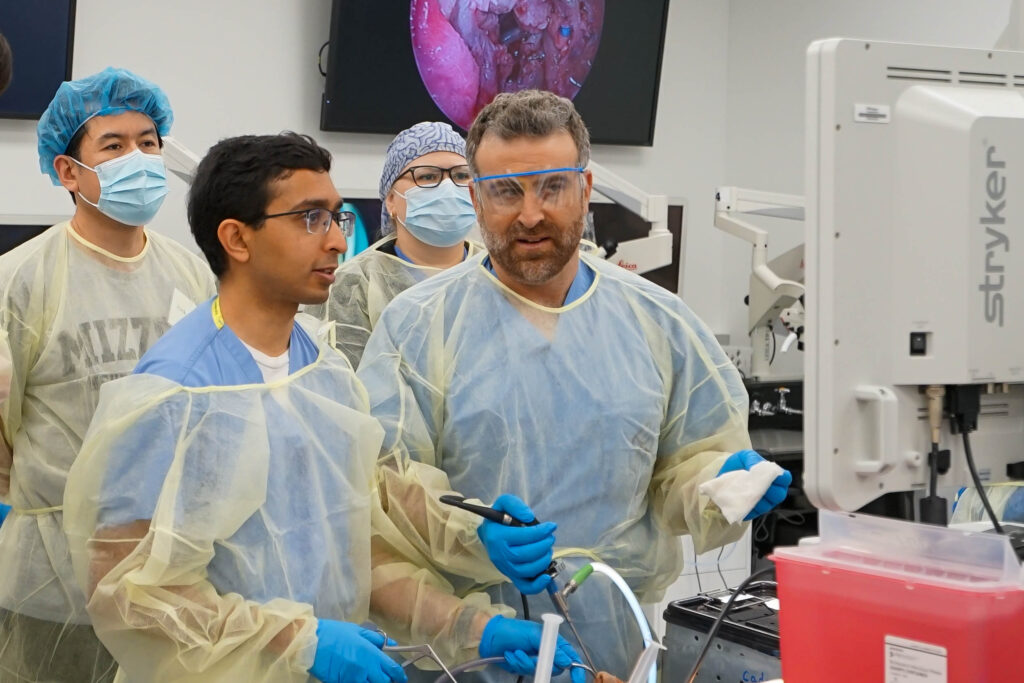
Held at the WashU Medicine Multidisciplinary Surgical Simulation Lab in the Farrell Learning and Teaching Center, the event is geared to advanced residents and fellows and included lectures on anatomy and surgical approaches, followed by hands-on surgical practice using cadaveric specimens. Trans-nasal endoscopic procedures were the focus of the morning session, while techniques for a cranio-orbitozygomatic approach were practiced during the afternoon session.
A noted highlight of this year’s course was the inclusion of perfused cadaveric specimens provided by new St. Louis surgical simulation vendor, MaxFi. This approach allowed trainees to test their skill at responding to vascular incidents that might occur during surgery.
Guest faculty included renowned neurosurgeons Andrew Little, MD, from the Barrow Neurological Institute and Michael Chicoinne, MD, from University of Missouri, Columbia and noted otolaryngologist Matthew Geltzheiler, MD, from Oregon Health and Science University.
This year marked the 12th annual event. Participating WashU Med Otolaryngology and Neurosurgery faculty included:
- Bhuvic Patel, MD (course co-director)
- Albert Kim, MD, PhD (course co-director)
- Nyssa Farrell, MD (course co-director)
- Lauren Roland, MD, MSCI
- Jarrett Walsh, MD
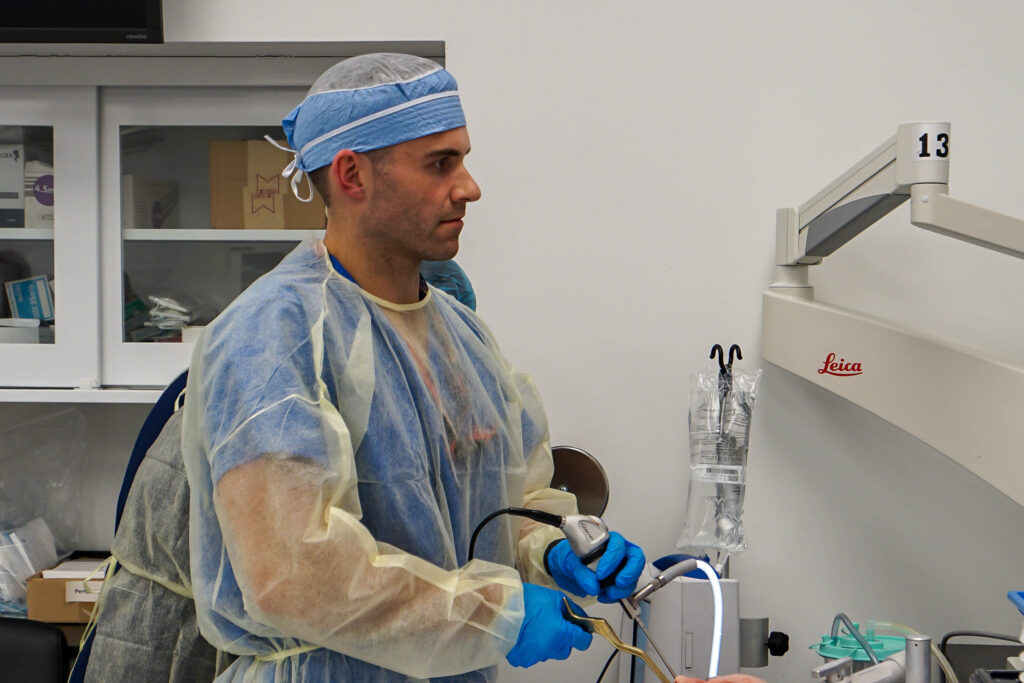
For ENT resident Andrew Peterson, MD, MSCI, the course was a valuable experience.
“The anterior skull base cadaver dissection course provided an invaluable combination of didactics, case presentations, and hands-on dissection, while also deepening collaboration with our neurosurgical colleagues,” he said. “This year’s course was our biggest and most comprehensive to date, a testament to the strengths of our rapidly growing anterior skull base program at WashU Medicine.”
Assistant Professor of Neurosurgery Bhuvic Patel, MD, was pleased with the development of the course as a regional attraction over previous years.
“The course is allowing us to broaden our regional impact on academic medicine as well as share our expertise in comprehensive open and endoscopic skull base techniques with the next generation of skull base surgeons,” he said.
This year’s course was supported by a number of vendors, including Integra/Codman, MaxFi, Medtronic, Peter Lazic, Silent Surgical, Spiway and Sutter Medical Technologies.