
Despite numerous amazing success stories of cochlear implant (CI) recipients, it remains near impossible to predict how well any given patient will understand speech following implantation. The reasons why have been largely unexplained.
The Division of Otology/Neurotology at WashU Medicine is working diligently to help answer these questions and provide implant recipients with a better assessment of their projected outcome. The group is investigating the use of an intraoperative measure called electrocochleography to optimize placement of the CI electrode array and to assess the health of residual hearing. Both are suspected important determinants of patient outcomes.
The measure, commonly referred to as ECochG, measures the electrical signals of sensory hair cells and auditory nerves in response to a sound stimulus. One of the cochlear implant electrodes is used to record the electrical responses, which can be monitored in real time during surgery.
Implant optimization is a multidisciplinary effort
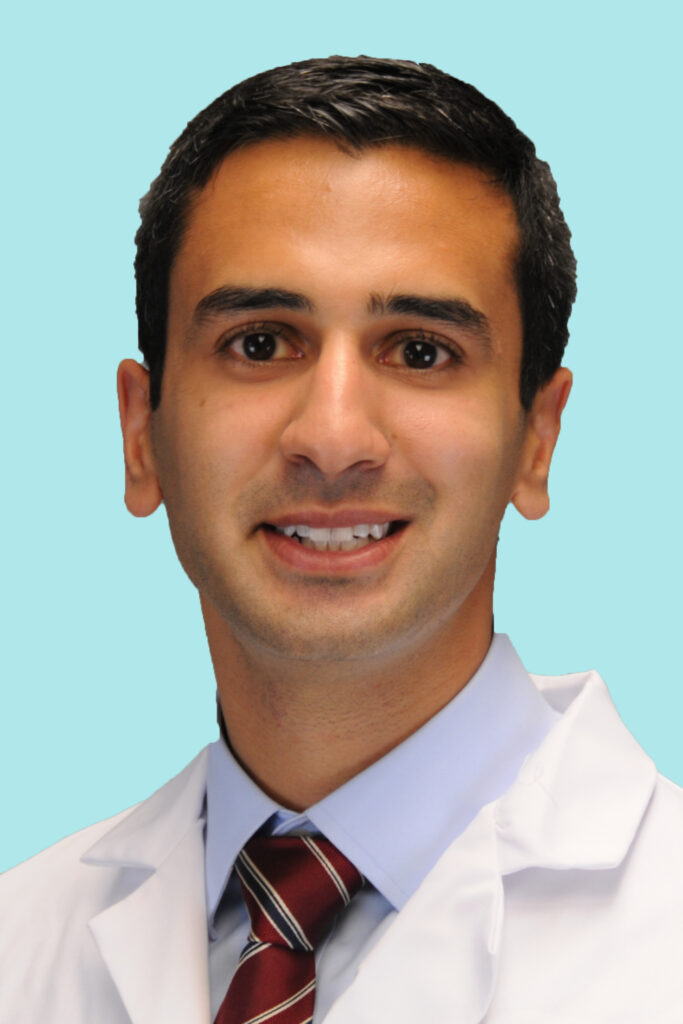
Former otolaryngology chief resident and now Clinical Fellow Amit Walia, MD, MSCI, has played a large role in the investigation and has presented the group’s findings at several national and international meetings. He explained there are three goals of ECochG utilization:
- Optimize placement of the CI electrode array.
- Assess the health of any residual natural hearing.
- Map the cochlear response for various frequencies after implantation to help inform postoperative mapping.

“Placement of the CI electrode is done with zero tactile feedback,” said Walia. “Having this real-time physiologic feedback offers surgeons a unique opportunity to preserve residual hearing and improve patient outcomes.”
The effort is multidisciplinary, involving surgeons, nurses, and audiologists with specialized training in electrophysiologic recording.
Senior Research Coordinator Shannon Lefler, AuD, serves as the primary research audiologist for most implant procedures. During CI surgery she places an earbud in the patient’s ear that will deliver the sound stimulus. She then monitors the ECochG recording and provides surgeons with verbal feedback on changes to signal amplitude. Finally, she uploads the data to a CI database for future use.
From research to standard-of-care
The group has published almost 20 papers on the use of ECochG to optimize cochlear implant surgery. These studies have provided important evidence that:
- The use of real-time ECochG monitoring improves patient outcomes compared to non-monitored CI insertions.
- Electrode array placement enhances the ability to predict outcomes when evaluated alongside ECochG measures.
- Extracochlear ECochG measures can also be used to predict CI speech perception performance, suggesting a preoperative estimation of performance may be helpful for patient counseling. Further studies are ongoing.
- ECochG amplitude parameters can be predictive of residual hearing.
- ECochG may help identify improperly inserted electrode arrays, such as a tip fold-over.
- ECochG data can be incorporated into AI prediction models to assist with prognosis and optimization of patient outcomes.
Lindburg Professor and Chair Craig Buchman, MD, has directed the development of ECochG for CI optimization at WashU Med and attributes the group’s success to a cohesive multidisciplinary effort.
“ECochG use during CI surgery is now considered standard-of-care at WashU Medicine,” he said. “The hard work of our group here, and many collaborators around the country, will hopefully improve outcomes for all recipients of cochlear implants.”