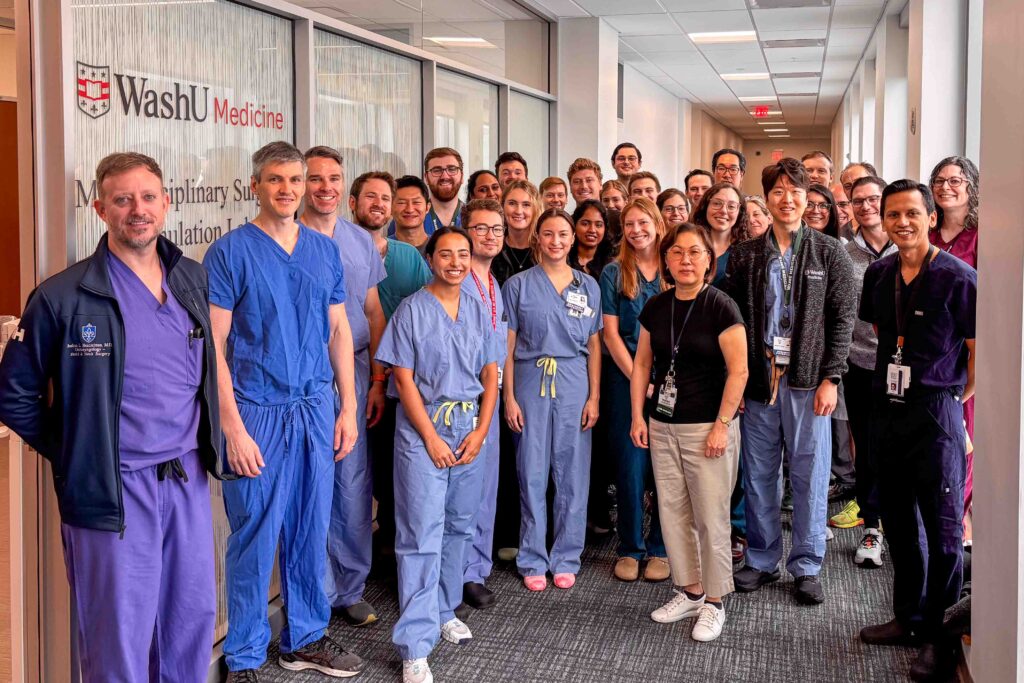
The 10th Annual Midwest Otolaryngology Simulation Training course brought together first- and second-year otolaryngology residents from across the Midwest to network and practice essential skills.
Hosted July 19 by the Department of Otolaryngology–Head and Neck Surgery at WashU Medicine, the event welcomed trainees and faculty from WashU Med, Saint Louis University, University of Missouri, and University of Tennessee.
Course organizers included pediatric otolaryngologists Jennifer Brinkmeier, MD, and Ben speaker, MBBCh, facial plastic surgeon John Chi, MD, MPHS, and Saint Louis University otolaryngologist Josh Hentzelman, MD. Numerous faculty members from the participating institutions were also in attendance.
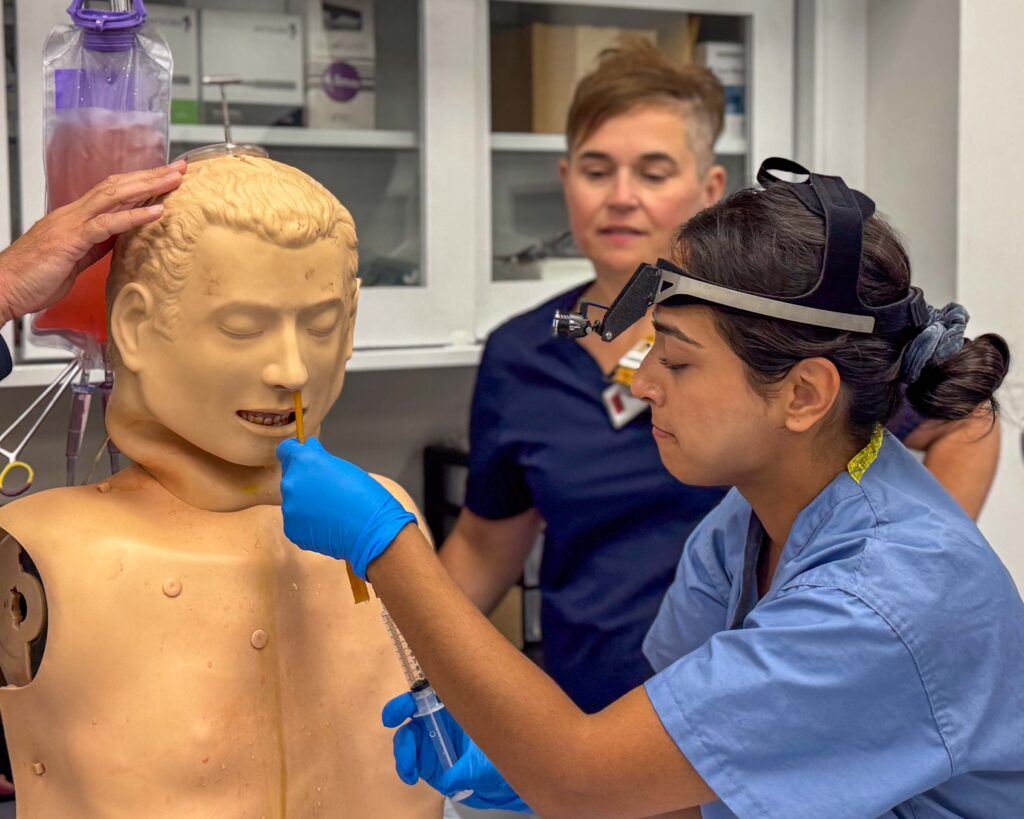
Small groups of residents rotated through a variety of stations with near one-on-one faculty mentoring. Skills practiced included:
- Ear tube insertion
- Epistaxis (nosebleed) management
- Cricothyrotomy
- Direct laryngoscopy and bronchoscopy
- Direct and flexible fiber optic intubation
- Fresh tracheostomy tube change
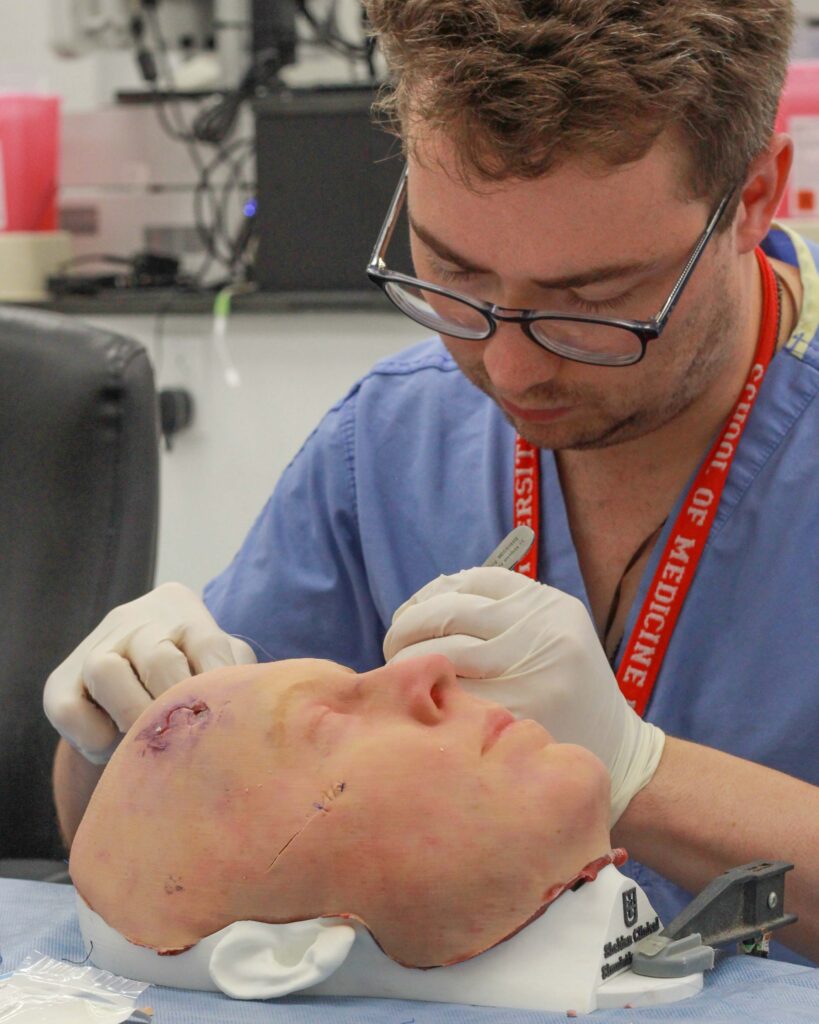
- Suturing and local skin flaps
Course offers crucial practice in a risk-free environment
“It’s important to introduce residents to these specialized procedures in a low-pressure environment prior to encountering these situations in their clinical experience,” said Brinkmeier. “Having the support of so many faculty makes the event a truly worthwhile experience for our trainees.”
Debuted at the event this year was a new local flaps simulator. A joint effort between Brinkmeier and facial plastic surgeon David Chang, MD, and medical sculptor Damon Coyle at Mizzou, the simulator features several layers of soft tissue over 3D-printed bony and cartilaginous support to offer a more realistic approach to local flaps practice.
In another first for the event, medical students were provided with the opportunity to experience the course. Friday prior to the camp, about a dozen students from the WashU Medicine ENT Interest Group were able to rotate through the various stations and get a better feel for what they might encounter in the clinic as an ENT resident.