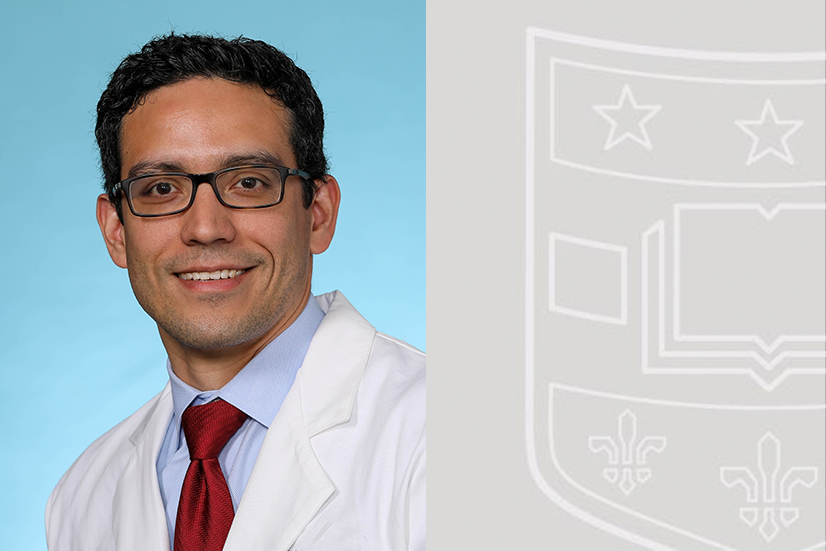
Head and neck surgeon R. Alex Harbison, MD, and his lab are exploring a novel approach to stopping cancer – starving the tumor of what it needs to defend itself from the body’s own immune system and other therapeutic interventions.
Head and neck cancer researchers at WashU Medicine are enlarging their arsenal of weapons to fight cancer. They have long recognized that not all cancers are alike, and their successful treatment requires a thorough understanding of the heterogeneity or differences between and within certain cancer types.
Harbison explained that in spite of strong advances in immunotherapy and multimodal therapy, patients with head and neck squamous cell carcinoma have high rates of recurrence and notable treatment side effects.
Immune checkpoint inhibition is one type of cancer immunotherapy that blocks the normal signals that act as “brakes” on the body’s own immune cells known as T cells. By inhibiting these checkpoint signals, the therapy allows T cells to regain activity and therefore recognize and destroy cancer cells more effectively.
According to Harbison, one factor of the tumor microenvironment that suppresses these anti-tumor T cells is the rampant production of polyamines, cations that normally promote protein production by cells and stabilize DNA and RNA.
“We found that polyamines in the tumor microenvironment are produced at hundreds of times their normal levels, and that elevation decreases anti-tumor T cell activity,” he said. “Naturally, we are curious whether polyamine depletion under these circumstances can be an effective strategy to restore the body’s anti-tumor immune response.”
Current work in the lab is now focused on three specific aims:
- Determine how excessive polyamine levels impact immune cell function;
- Explore the ability of polyamine depletion to promote better immune function by eliminating required substrates of polyamine production; and
- Develop a novel tumor targeting therapy to restore polyamine levels and improve anti-tumor immunity.
Harbison credits much of the work’s progress to his lab team, including Lab Manager Cody Huffman, Postdoctoral Research Scientist Jing Wu, PhD, research mentors Sid Puram, MD, PhD, and Guangyong Peng, MD, PhD, and members of the Division of Head and Neck Surgery.
Additional collaborators on the work include Gary Patti, PhD, Kevin Cho, PhD, Leah Shriver, PhD, Brian Edelson, MD, PhD, Max Artyomov, PhD, Daniel Miller, MD, PhD, Greg Baker, PhD, and Maureen Kane, PhD. The work is supported by a Washington University Dean’s Scholar Award and NIH K08DE034837.
For more information, please contact R. Alex Harbson, MD, at hrichard@wustl.edu.