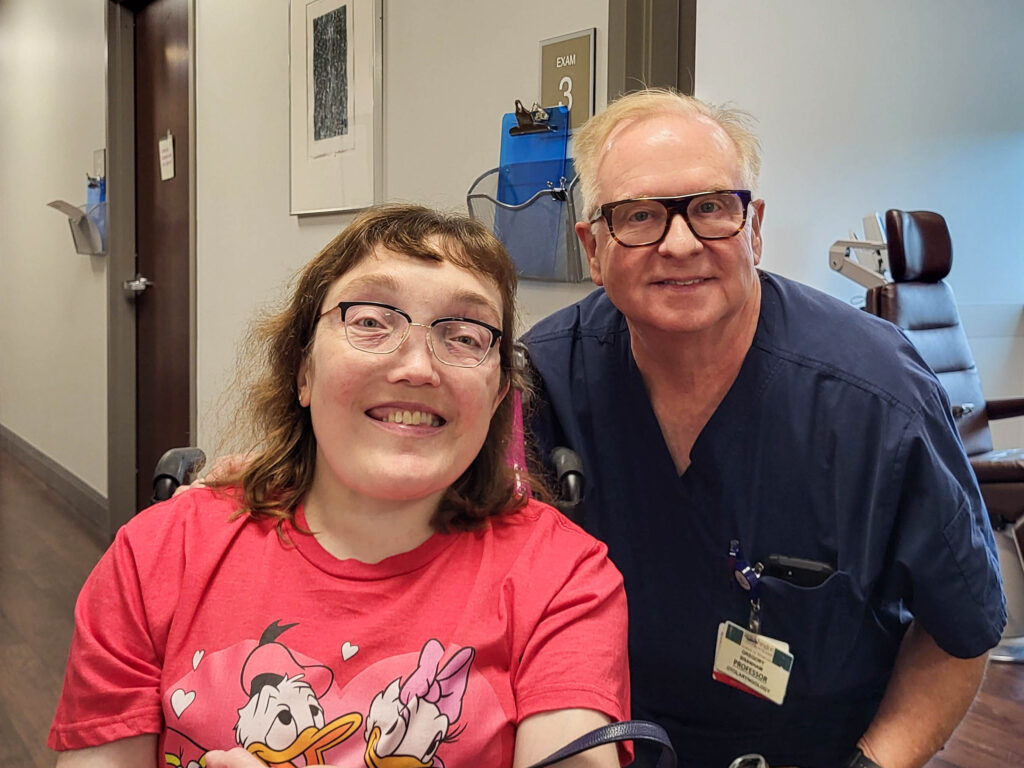
Where others saw a questionable outcome, WashU Medicine facial plastic surgeon Greg Branham, MD, instilled hope in a patient all too accustomed to medical procedures.
After three decades of surgeries to overcome bone breaks and deformities caused by fibrous dysplasia, Tiffany Meyer faced a more personal challenge – a facial deformity that threatened to impact her sense of self.
Tiffany Meyer grew up in doctors’ offices. Diagnosed with McCune-Albright Syndrome or MAS at ten months of age, she has undergone countless tests and procedures and endured more than 30 surgeries. As a child, she was enrolled in detailed metabolic studies to better understand her condition, and she has been monitored twice yearly (now yearly) with visits to NIH from the time she was 3 years of age.
MAS is a rare, genetic, non-inherited syndrome that is typically characterized by a triad of symptoms:
- Polyostotic fibrous dysplasia occurs as fibrous connective tissue replaces normal bone causing pain and weakness, resulting in fractures and deformities.
- Café-au-lait skin spots are flat light-brown pigmented birthmarks. Though benign and generally harmless, when present in quantities, they suggest underlying genetic conditions like MAS or Neurofibromatosis type 1.
- Hyperfunctioning endocrine system, most commonly resulting in the overproduction of estrogen, growth hormone or thyroid hormones.
No cure exists, so medical intervention is limited to treating symptoms and usually consists of medications to strengthen bones and block hormone production and surgery to correct bone fractures.
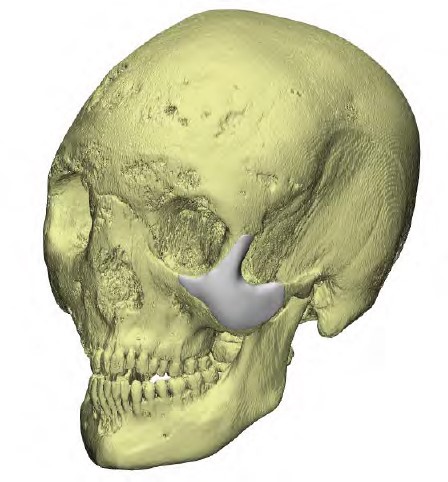
Now in her early 40s, Meyer first noticed swelling of her left cheekbone in Summer of 2022. A course of antibiotics decreased the swelling, but the site became painful and a persistent infection with an open wound developed. Careful debridement and antibiotics eventually cleared the infection but left a depressed scar with the overlying skin considered too thin (condemned) to support an implant that would improve her facial contour.
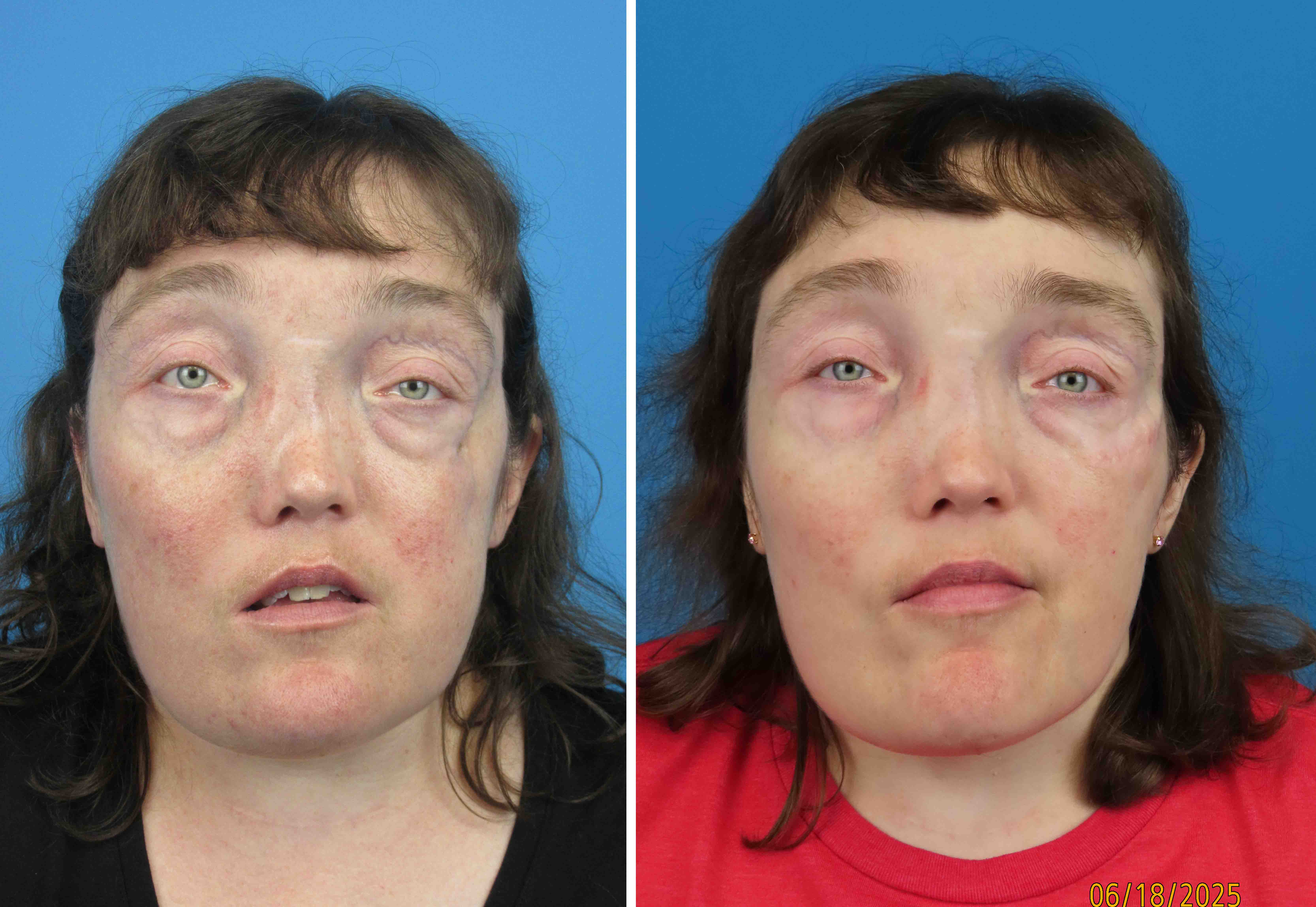
After months of monitoring to ensure the infection had cleared, Branham inserted the implant and used healthy adjacent skin to replace the condemned skin. That surgery was successful, and Meyer eventually underwent a second implant to address secondary contour issues.
She is very pleased with the result.
“Dr. Branham was very nice and took a chance with this procedure when others wouldn’t,” she said. “He was especially caring and personable. I would recommend him to anyone!”