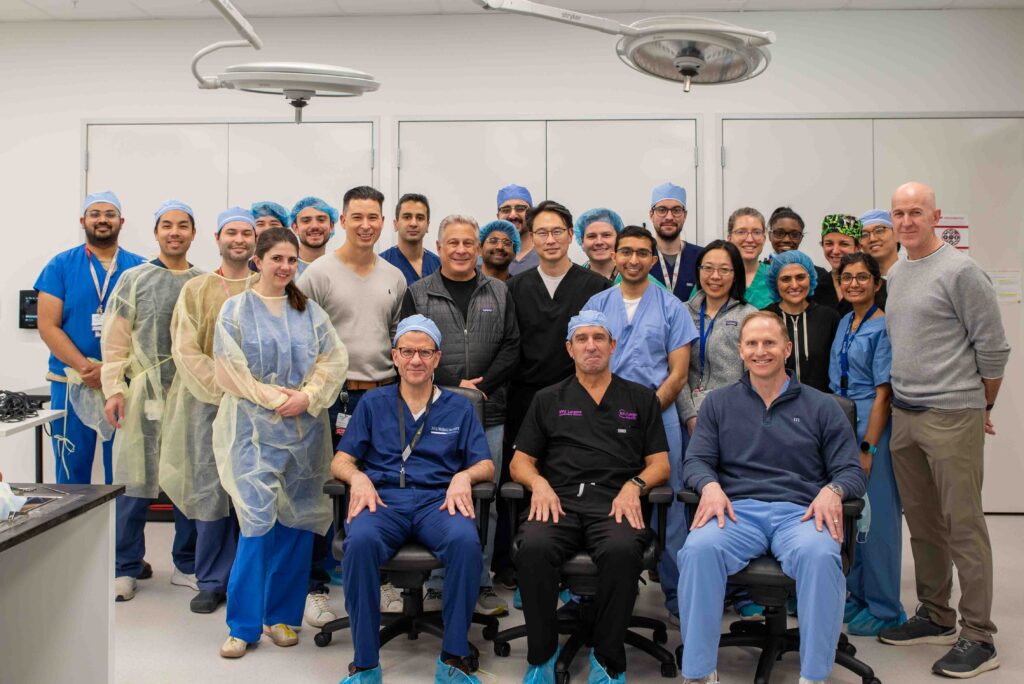
Mentored by leading neurotologists and neurosurgeons, WashU Medicine Otolaryngology and Neurosurgery residents explored techniques to remove tumors from the lateral skull base at a specialized multidisciplinary course February 28.
Working in WashU Med’s state-of-the art Multidisciplinary Surgical Simulation Lab, residents practiced a variety of surgical approaches used to remove tumors and treat vascular defects from a complex area behind the ear. In the operating room, neurosurgeons and neurotologists work closely together on these surgeries, so the course was an important introduction to collaborative surgical efforts.
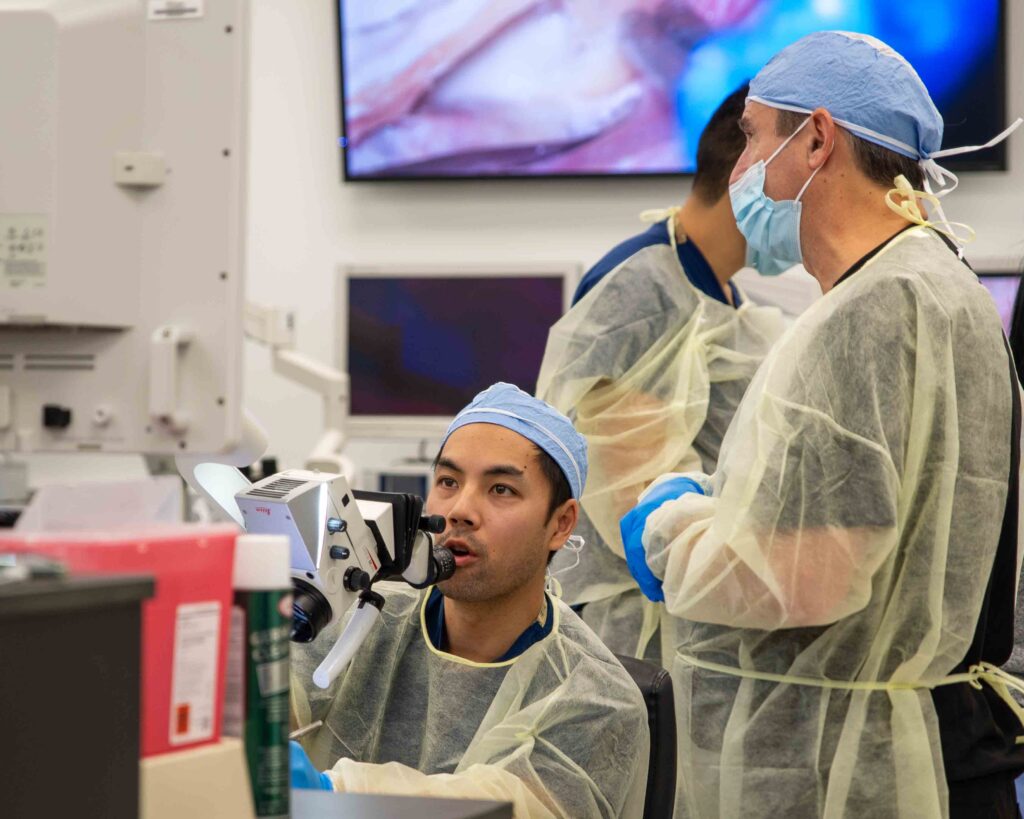
Special guests New York University neurosurgeon John G. Golfinos, MD, and Indiana University neurotologist Rick F. Nelson, MD, PhD, provided lectures and assisted residents in the lab.
The full-day course was supported by educational grants from global medical technology companies Stryker, Cochlear Americas and Grace Medical. Participating WashU faculty included:
- Matthew Shew, MD (course co-director)
- Bhuvic Patel, MD (course co-director)
- Albert Kim, MD, PhD (course co-director)
- Michael Chicoine, MD (University of Missouri, Columbia)
- Nedim Durakovic, MD
- Jacques A. Herzog, MD
- Pawina Jiramongkolchai, MD, MSCI
- Amit Walia, MD (neurotology fellow)
- Harsh Sah, MD (neurosurgery fellow)
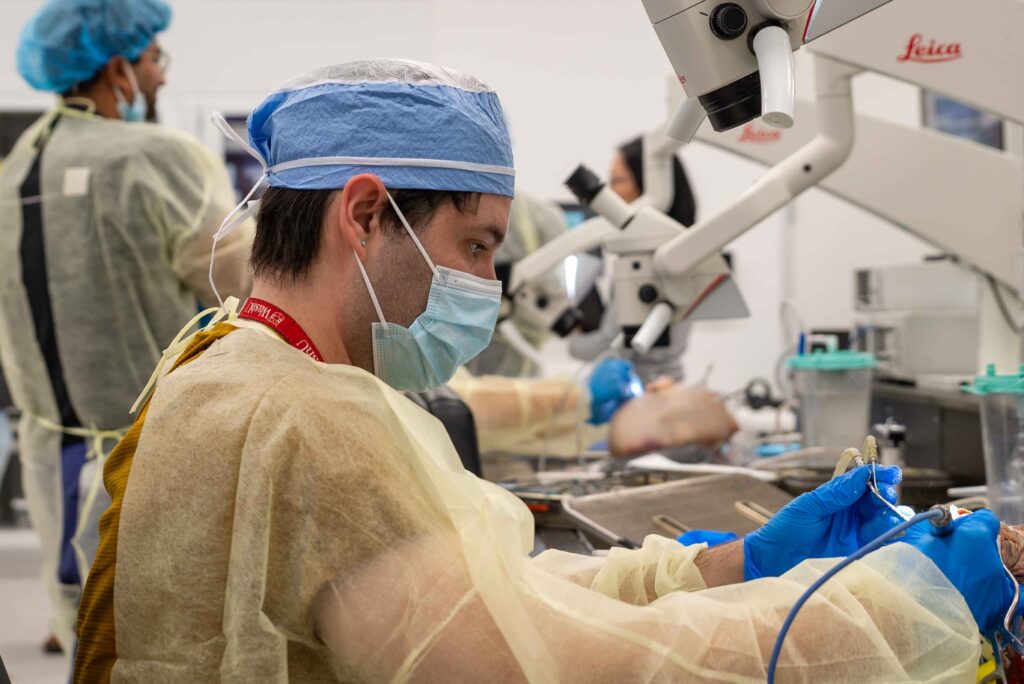
Residents gained experience with translabyrinthine, retrosigmoid, middle fossa and petrosal approaches. Step-by-step instruction and an appreciation of the nuances of each technique highlighted the experience for trainees. Residents were also able to experience the latest virtual reality surgical technology provided by ImmersiveTouch.
Course co-director Matthew Shew, MD, was pleased with the unique opportunity for residents to experience surgical collaboration that can’t be taught through lectures alone.
“This is a true collaborative effort, giving trainees a chance to work alongside neurosurgical colleagues, learn from each other’s instincts and knowledge, and begin internalizing the complex anatomy and lateral skull base approaches,” he said. “We were very fortunate to have Drs. Nelson, Chicoine, and Golfinos share their surgical expertise and, more importantly, the subtle nuances and lessons they’ve learned throughout their distinguished careers. At WashU Medicine, the strong partnership Neurosurgery and Otolaryngology continues to elevate our research, education, and patient care.”