Sidharth V. Puram, MD, PhD, received his undergraduate degrees in Biology and Neuroscience from MIT, then pursued a combined MD/PhD program at Harvard Medical School. He completed a residency in Otolaryngology at Harvard’s Combined Program (Massachusetts Eye and Ear) and a research fellowship at MIT before pursuing fellowship training in Head and Neck Surgical Oncology and Microvascular Reconstruction at James Cancer Center, Ohio State University. He joined the faculty at WashU Medicine in 2019 and served as division chief of Head and Neck Surgery where he was the driving force behind creation of The Robert Ebert and Greg Stubblefield Head and Neck Tumor Center.
What was your childhood like?
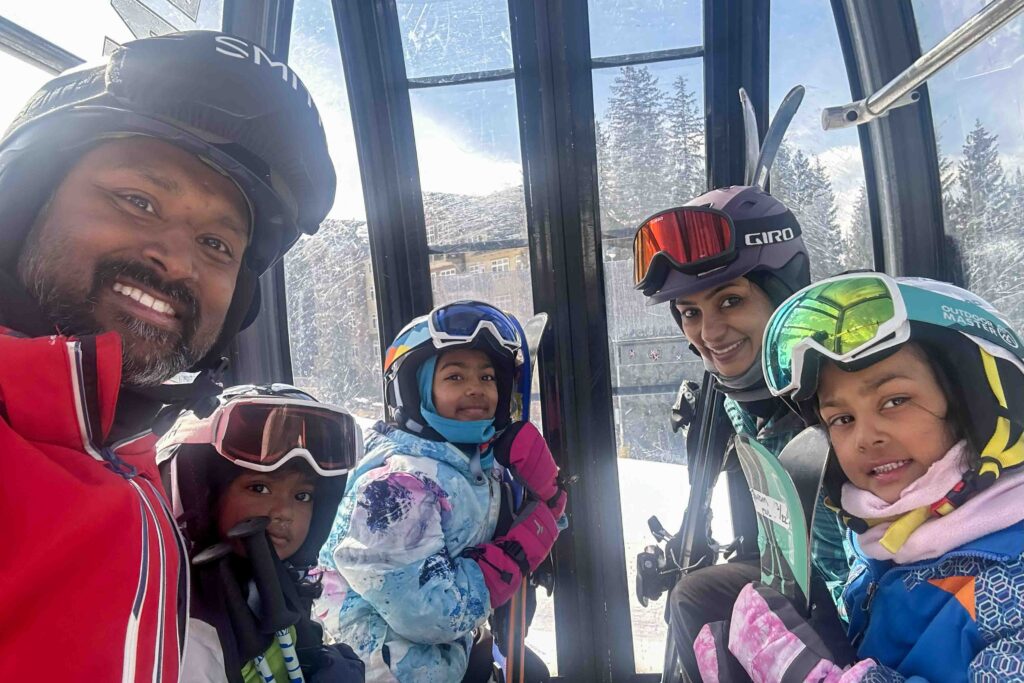
I was born in Minnesota, and with my younger brother Rishi, had a pretty typical Midwest childhood. I played ice hockey as a child then developed a love for downhill skiing, specifically slalom and giant slalom. I was a passionate member of the Debate and Extemporaneous Speaking teams in high school, along with playing soccer.
My parents immigrated from India in search of better opportunities. My dad came first, choosing his new destination based on a summer photo of the business school at the University of Minnesota. He arrived in February to a very different weather than he had pictured. Fortunately, there was a small but unified Indian community there for support, and that’s how my parents met the parents of WashU alum Ravi Uppaluri, MD, PhD.
What inspired you to become a doctor?
My parents had always instilled in us the importance of pursuing a career with community service at its core. I considered law and medicine, but I was truly influenced by seeing the long lasting impact a physician can have on a patient. During my undergraduate years, I also developed a strong passion for research working in the lab of Bob Langer, PhD, which ultimately guided me to the MD/PhD program at Harvard.
How would you describe life in the Puram household now?
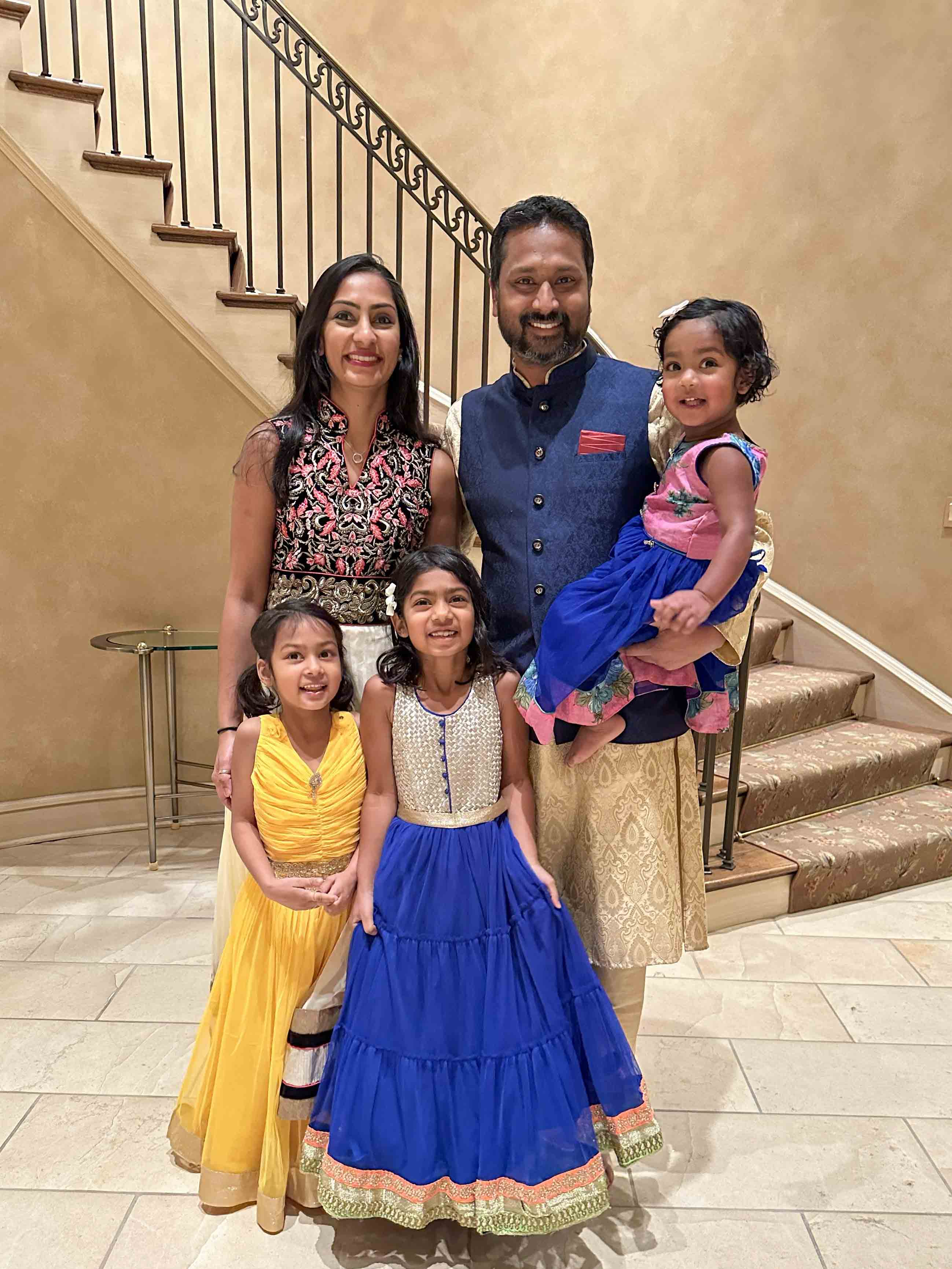
Crazy would be a fair word, but we have fun with it. My wife Akshita works at Enterprise as part of the Digital Product team, and we have three young daughters – Lalitha, 9, Leela, 7, and Vara, 4. Outside the house it’s controlled chaos, but we feel lucky to have developed a wonderful life here in St. Louis. Our favorite family outings are the City Museum, Science Center, and Magic House.
Why did you decide to pursue the role of chair at this stage of your career?

I had a tremendous opportunity to learn and grow as a junior faculty member and then as division chief. I was saddened by Craig Buchman’s decision to step down, but I realized that many of the things I enjoyed – mentoring, career development, and building programs like the tumor center – were the cornerstones of being a successful chair. With all the current uncertainties in higher education, I thought that someone internal taking the helm might be most beneficial to the department. I was excited about the idea of continuing to work closely with my many friends, colleagues, and collaborators across the University.
Do you have a particular leadership style?
I have always tried to adopt a collaborative approach. I think it’s important to be surrounded by diverse thoughts and opinions and use them collectively to come to a consensus. You also need to be willing to pivot mid-stream if you discover things aren’t working as planned.
“I believe that bringing people up together will build and take our department to the next level, and I hope to develop a shared vision for that journey in the coming few months.”
I also feel it’s time to empower our division chiefs and vice-chairs with more autonomy and resources to bring their own ideas to fruition. When each division is firing on all cylinders, the department will be as strong as it can be and infused with the best ideas and energy possible.
What is something your colleagues would be surprised to learn about you?
During grad school, I decided to get my pilot’s license. Flying is something I enjoy and always wanted to do after watching my dad fly when I was a child.