
The Department of Otolaryngology – Head and Neck Surgery at WashU Medicine has created a new seven-week course to promote leadership skills for upper-level residents.
According to Director of Resident Education Judith Lieu, MD, MSPH, the motivation for the course stems from the fact that senior and chief residents are de facto leaders of their teams on each rotation and will be leaders in the operating room and clinic when they graduate.
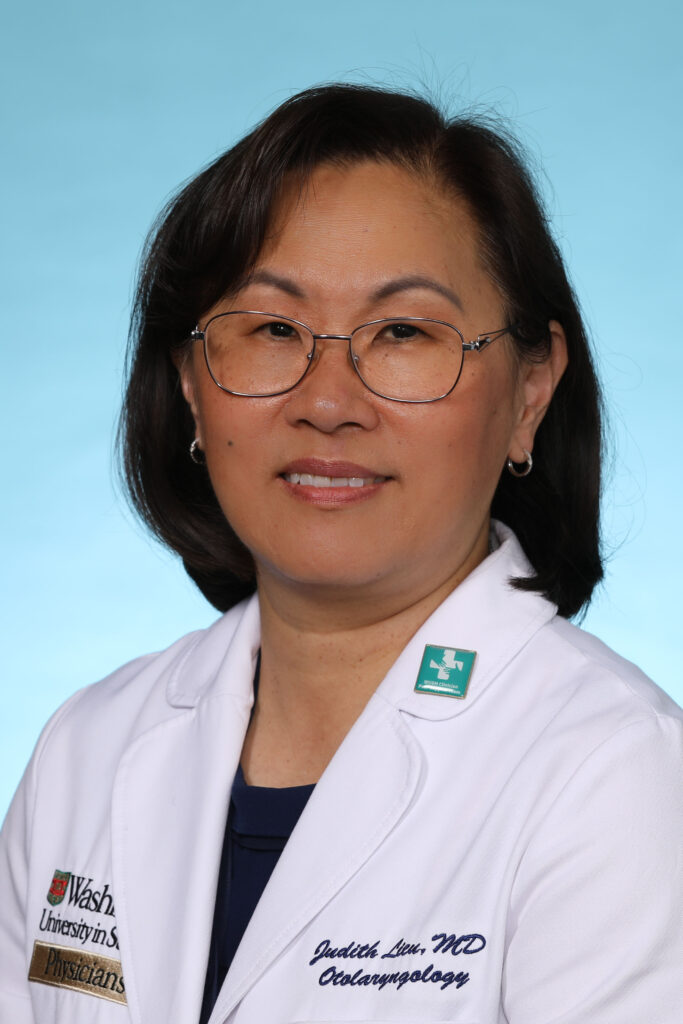
“Our residents have obviously already acquired some leadership skills,” she said. “This course builds on that and covers many topics that are applicable to their clinical practice regardless of previous experience, to help them to develop a knowledge base and skills they may not have had before. We hope that this course will help them all gain confidence that they will meet the expectations for leadership.”
Rather than assume that they will learn these skills on their own, the group met Wednesday mornings to teach and practice leadership skills. Otolaryngology faculty provided insights direction on select topics to both senior (PGY4) and chief (PGY5) residents.
Topics included the following:
- Self-Awareness & Core Values (Judith Lieu, MD, MSPH)
- Empathy in Leadership (Sid Puram, MD, PhD, and Judith Lieu, MD, MSPH)
- Effective Feedback & Coaching (John Schneider, MD)
- Managing Conflict & Difficult Conversations (Allison Ogden, MD)
- Teamwork & High-Reliability Teams (Allison Ogden, MD)
- Leading Change & Organizational Culture (Judith Lieu, MD, MSPH)
- Integration, Application, & Future Development (Kate Dunsky, MD)
Chief Resident Katherine Garvey, MD, found the course timely and appreciated by her resident colleagues.
“It was great to have dedicated time to reflect and think critically about how to become a better leader,” she said. “I am grateful to the department for investing in resident development as both physicians and leaders.”
Participating faculty member and WashU Medicine Assistant Dean for Faculty Coaching John Schneider, MD, provided context for the course.
“Life-long learning in otolaryngology isn’t just for anatomy and physiology, we all need to invest in our skills as communicators, leaders, and coaches,” he said. “Teaching residents how to give/take feedback, communicate in conflict, develop teams and more builds foundations for them to be future leaders in otolaryngology and beyond.”