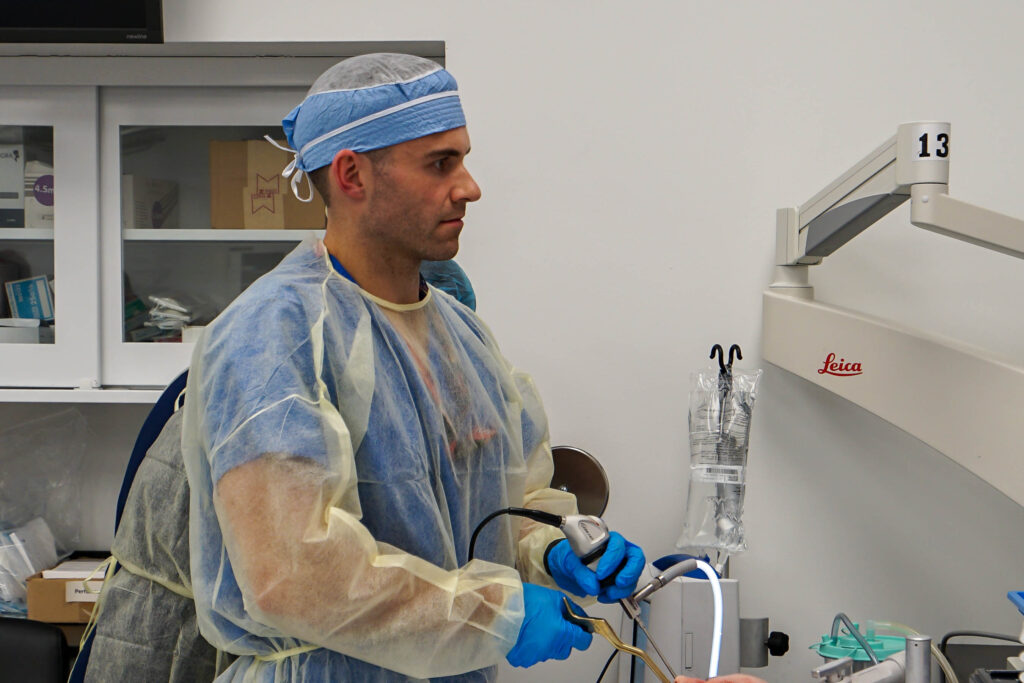
Four chief residents in the Department of Otolaryngology at WashU Medicine have matched their top choices for prestigious fellowship programs, pursuing advanced surgical training in their chosen specialties.
When 80 percent of a graduating cohort pursue fellowship training, that tells you something about the program’s focus on preparing trainees for academic medicine.
When those graduating residents all match their top choices for fellowship – and in four different specialties – that tells you something special about the quality and breadth of their training.
We asked these residents to share their inspiration for their chosen specialty, what they were looking for in a fellowship program and what advice they had for their junior colleagues who might be considering fellowship training.

Andrew Peterson, MD, MSCI
Fellowship in Rhinology and Skull Base Surgery, University of Pittsburgh Medical Center
What inspired your interest?
My interest is in pursuing a combined anterior skull base and head and neck surgical oncology career path. I will be going through the AHNS match this year to do a formal H&N surgical oncology and microvascular reconstruction fellowship to follow my anterior skull base fellowship. I hope to use this training to be able to offer endoscopic, open, or combined approaches to sinonasal and skull base malignancies, as well as do more traditional head and neck ablation and reconstruction. The career paths of some of the giants in our field, including Carl Snyderman, MD, and Ricardo Carrau, MD, inspired me and opened me to this niche intersection of the two fields.
What qualities were you looking for in a fellowship program?
UPMC offers unparallel anterior skull base exposure and also has equally strong H&N surgical oncology training. I am looking forward to bringing the skills that WashU has taught me and expanding upon them while being exposed to advanced cases and new surgical techniques.
Advice to your junior colleagues?
Once you decide upon pursuing a fellowship, find a program that matches their training to your career goals and seize the opportunity. Fellowship will be the most transformative time of training that sets you up for the rest of your career, so don’t settle.
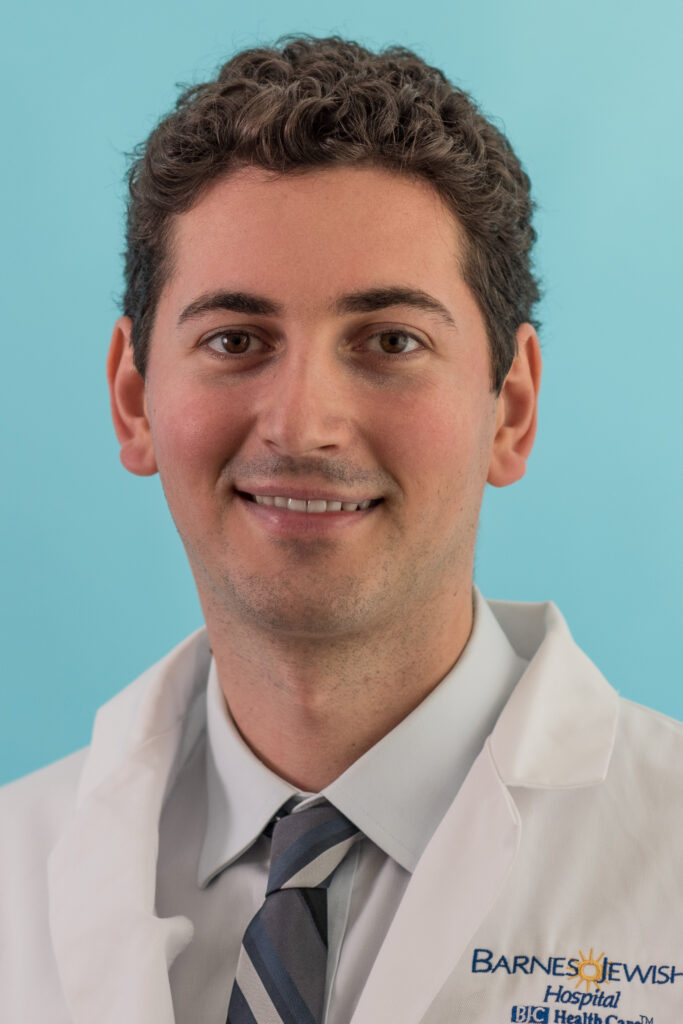
William Strober, MD, MSCI
Fellowship and institution: Laryngology at Johns Hopkins University School of Medicine
What inspired your interest in this particular specialty? I have really enjoyed the mix of endoscopic and open approaches for laryngological surgeries. I also really loved seeing patients feel better as soon as they leave the OR, such as in thyroplasties and subglottic stenosis dilations.
What qualities were you looking for in a fellowship program?
I was looking for a program with strong breadth of expertise in the field, that also had a high volume of open airway surgery. The personalities are especially important when choosing a fellowship as you only will work with a very small group of faculty. I wanted to make sure I was going to be with mentors I would enjoy spending all day with.
It was fun getting to meet my future laryngology colleagues through the match process. I’m most looking forward to seeing all of the different ways that my new mentors approach the specialty. The practice of laryngology is really heterogeneous, and each laryngologist has their own specific ways of handling cases.
Advice to your junior colleagues?
Start meeting with mentors early and really think about what you could see yourself doing in the future. Get ready for a lot of traveling and meeting new people!
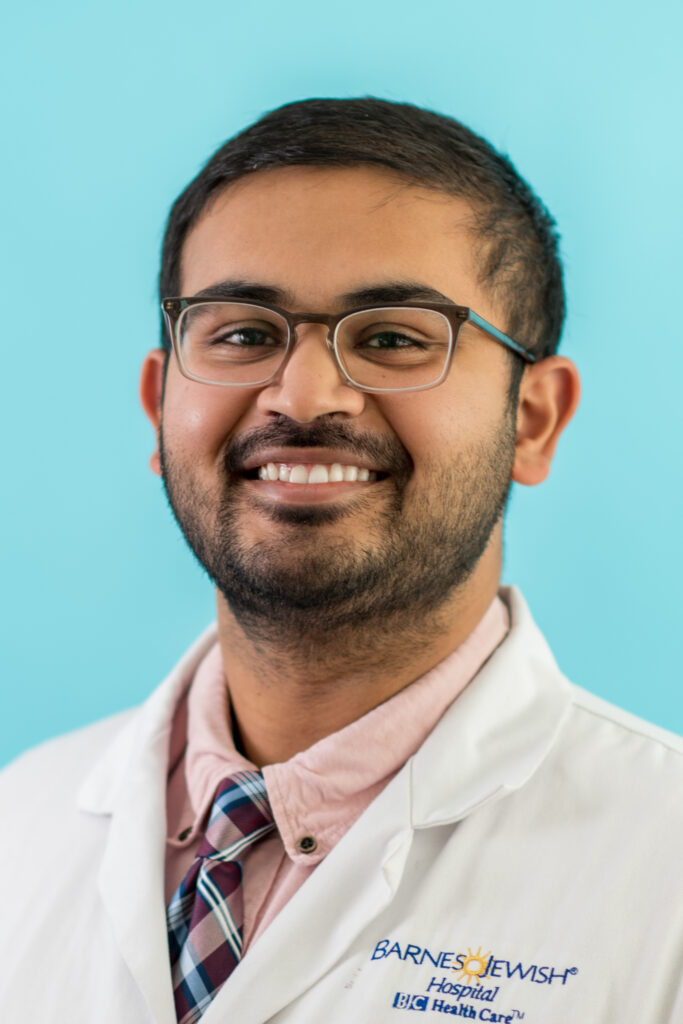
Jordan Varghese, MD, MSCI
Fellowship in Otology, Neurotology & Lateral Skull Base Surgery, University of North Carolina at Chapel Hill
What inspired your interest?
There were several factors that led me to my fellowship decision. I studied Biomedical Engineering in undergrad at Georgia Tech, including a senior capstone project designing a novel ventriculoperitoneal shunt. Since then, I have always been drawn towards the application of biotechnology and devices within the practice of medicine. I have had great mentors since medical school who got me involved with research in auditory electrophysiology and cochlear implant outcomes which I found intellectually fascinating. I also realized how much I enjoyed surgeries under the microscope and the satisfaction in helping to restore senses like hearing and balance. Neurotology is truly a one-of-a-kind field and was the perfect fit for me.
What qualities were you looking for in a fellowship program?
I hoped to find a program with high operative case volume in both advanced otology and lateral skull base. Training in all three primary routes to the cerebellopontine angle with emphasis on transtemporal approaches. Research infrastructure including an established track record with clinical/translational research for implantable hearing devices alongside strong audiology research colleagues. Mentors who are helping to advance the field while also being collegial and supportive. Broadening my scope by learning different ways to approach ear surgery from fellowship faculty so that I can build on the great foundation I have received from my world-class residency mentors at WashU. UNC really checked all the boxes and is in a great location where I am excited to move with my wife and two young daughters to be closer to our family in Atlanta!
What are you most looking forward to?
I had a fantastic time on the fellowship interview trail, getting to know my co-applicants and future colleagues and having the privilege to have one-on-one conversations with esteemed faculty across the country. There are some large shoes to fill within the field of neurotology. It has truly been a highlight of my training getting to meet so many of the people I have admired over the years and seeing how they are all also so genuine and personable.
Advice to your junior colleagues?
You’ve already made it! Truly every field within otolaryngology is fascinating, surgically challenging and a place where you can build a fulfilling career with great people. Do your best to consider which patients/colleagues with whom you enjoy building relationships, what clinical questions interest you and where you think you might want your career to go. You can never predict the future but keep working hard and you will have only good options in front of you!
I am most looking forward to dedicating all my professional energy toward mastering the technical skills and decision making needed to be an excellent ear surgeon.

Katherine Garvey, MD
Fellowship in Advanced Oncologic Head & Neck Surgery & Microvascular Reconstruction Fellowship, Thomas Jefferson University
What inspired your interest?
I am drawn to head and neck for many reasons, including the complexity of the surgery, the opportunity for creative problem-solving, and the meaningful relationships we develop with patients going through exceptionally difficult times in their lives. I find the challenge of navigating the delicate balance between treating disease and preserving form and function – especially through microvascular reconstruction – particularly exciting. I love that the specialty is a team sport. So many people are absolutely essential to taking care of these complex patients, and I derive a lot of joy working collaboratively, both in and outside of the OR.
What qualities were you looking for in a fellowship program?
My priorities were finding a program that offered exceptional clinical and surgical training, a high volume of complex cases, active research programs, strong mentorship, and a collegial learning environment. I wanted to train somewhere that would build upon the outstanding foundation I have received at WashU Medicine and help me develop into a well-rounded academic surgeon.
I am very much looking forward to continuing to develop my surgical skills, particularly in microvascular reconstruction, and learn from new mentors. I am also very excited to continue to cultivate my passion for teaching in my role as a fellow, as I aspire to a career in academic medicine that integrates teaching and medical education into my day-to-day work.
What was the interview/match process like?
The interview process was exciting! I was fortunate to interview at a number of outstanding programs across the country. It was a unique opportunity to meet leaders in the field, learn about different approaches to surgical training, and envision what my life might look like in fellowship and beyond!
One of the most challenging aspects was developing my rank list. There are so many excellent programs, each with unique strengths, and it can be difficult to compare them directly. I spent a lot of time reflecting on my experiences, speaking with mentors, and considering where I felt I would receive excellent training and be happy. Ultimately, I tried to find a program that aligned with my professional goals and where I could genuinely envision myself thriving.
Advice to your junior colleagues?
My biggest advice is to keep an open mind! Fellowship is an opportunity to pursue additional training in an area you find genuinely exciting, so it is important to take the time to think about what you enjoy, the patients you want to care for, and the career you envision for yourself.
For those preparing for the match, I would encourage speaking with current fellows, recent graduates, and various faculty at different institutions to try to get the best understanding of what programs have to offer. There are many great programs that will provide excellent training, so be thoughtful about your priorities and what you are hoping to gain from fellowship. Lean on your mentors throughout the process — their advice and support are invaluable, particularly when navigating difficult decisions. And try to enjoy the experience! It is a wonderful opportunity to meet people in your future field, appreciate how much you have grown and accomplished throughout residency, and be inspired about all the opportunities ahead!