The Division of Pediatric Otolaryngology provides care to children from birth to 18 years of age with all types of ear, nose and throat conditions. Our group is comprised of full-time pediatric otolaryngologists, general otolaryngologists, and neuro-otologists.
We receive referrals from pediatricians and primary care providers throughout the region and have expertise in:

- breathing disorders
- obstructive sleep apnea
- laryngeal and tracheal abnormalities
- hoarseness
- hearing loss
- ear infections
- speech and language disorders
- swallowing disorders
- neck masses and lesions
- tumors and malignancies of the head and neck
- vascular anomalies
- birth defects affecting the face, head, and neck
- problems associated with clefting of the lip and palate
- chronic ear infections
- cholesteatoma
- cochlear implantation
- chronic sinus infections
Many of the services that we provide are through collaborations with other subspecialists at Washington University and St. Louis Children’s Hospital. We work closely with our colleagues in pulmonary medicine to provide care for children who require tracheostomies and home ventilators. We also provide care through the multidisciplinary Cleft and Craniofacial Team for children born with cleft lip and palate and other craniofacial anomalies.
The pediatric otolaryngology team also participates in the Vascular Anomalies Clinic to provide children with medical and surgical options for these challenging lesions. Our group also is a vital part of one of the most busy programs in the country in caring for children with hearing loss. We provide medical and surgical services for children with hearing loss, offering options of surgical reconstruction, hearing amplification, Baha, and cochlear implantation.
To make an appointment with any of our specialists, please call (314) 454-6162.
Fax: (314) 454-2174
For more information on pediatric conditions and care, visit our patient forms and information page.
Physicians
Advance practice providers
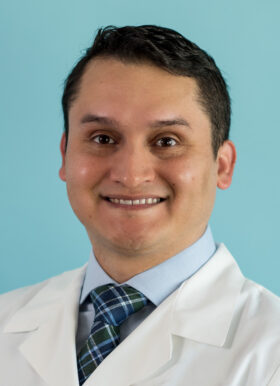
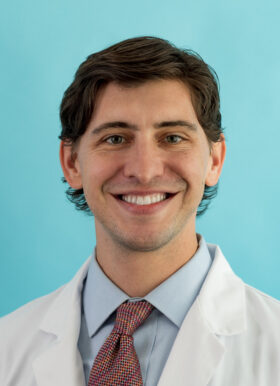
Joseph Roh, MD
MD: Washington University School of Medicine
“I was so thrilled to get the opportunity to stay and train at Washington University and its incredible otolaryngology department. More than just a place on the cutting edge of practice and research, it is filled with amazing people through and through.”
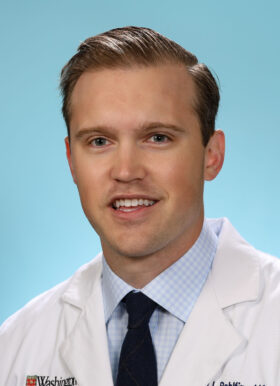
Matthew L. Rohlfing, MD
Assistant Professor of Otolaryngology—Head & Neck Surgery
- Phone: 314-362-7509
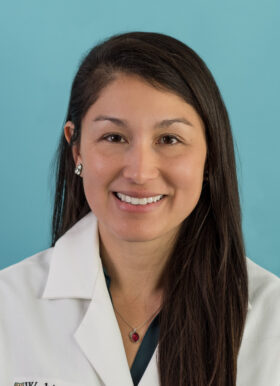
Lauren Roland, MD, MSCI
Assistant Professor of Otolaryngology—Head & Neck Surgery
- Phone: 314-362-7509
Dr. Roland is a specialist in rhinology and anterior skull base disease, including chronic rhinosinusitis, nasal polyps, fungal sinusitis, nasal obstruction, and CSF leaks.
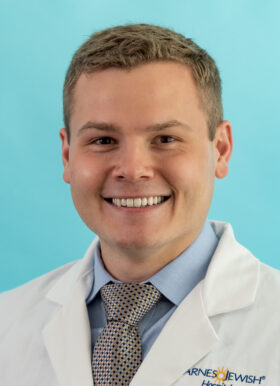
Daniel Romano, MD
MD: Indiana University School of Medicine
“I was drawn to WashU by the exceptionally strong and well-rounded surgical training, the quality of research, the livability of the city of St. Louis, and the world-renowned faculty. I was ultimately sold on the supportive and collegial culture conveyed by faculty and resident interviewers, who were as congenial and down-to-earth as they are esteemed and accomplished.”
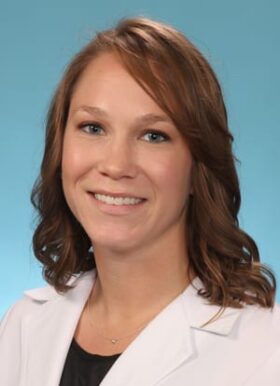
Kelsey M. Rosenquist, MA, CCC-SLP
Lead Speech-Language Pathologist, Speech and Swallowing Center
Otolaryngology—Head & Neck Surgery
Kelsey’s clinical interests include: modified barium swallow studies; FEES; flexible and rigid endoscopic laryngeal imaging and videostroboscopy; swallowing and voice restoration for people who have had head and neck cancer related surgeries; fitting and management of tracheo-esophageal voice prosthesis; and use of the electrolarynx.
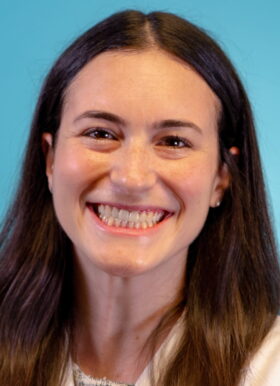
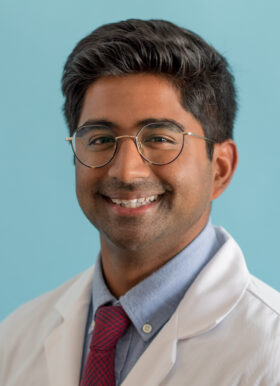
Prithwijit Roychowdhury, MD
MD: University of Massachusetts School of Medicine
“I am thrilled to join the WashU community and begin my career in otolaryngology! It is an honor to be able to train at a program that balances an incredible clinical and surgical training with limitless research opportunities, all in a collaborative and supportive environment.”
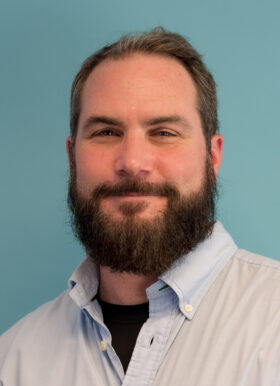
Mark A. Rutherford, PhD
Associate Professor of Otolaryngology—Head & Neck Surgery
Electrical and chemical signaling across membranes, neural temporal code, spike generation, molecular anatomy of synapses, membrane excitability disorders, auditory and vestibular systems, synaptic electrophysiology, sensory hair cells, spiral ganglion neurons, ribbon synapses, ion channel organization and function, nano-scale microscopy, Ca2+ and voltage imaging, mutational analysis, computational modeling, cochlear implants, structure-function relationships, synaptic development and heterogeneity, genetics of hearing and deafness, optogenetics, mitochondria, network and synaptic plasticity, efferent neuromodulation of sensory processing, prevention of hearing loss.
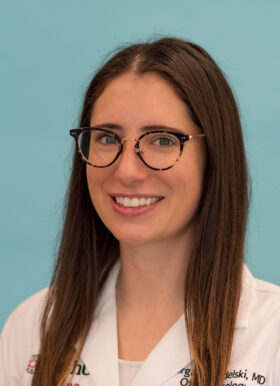
Morgan Sandelski, MD
Fellow in advanced head and neck surgical oncology and microvascular reconstruction
Otolaryngology–Head & Neck Surgery