Lieu Lab
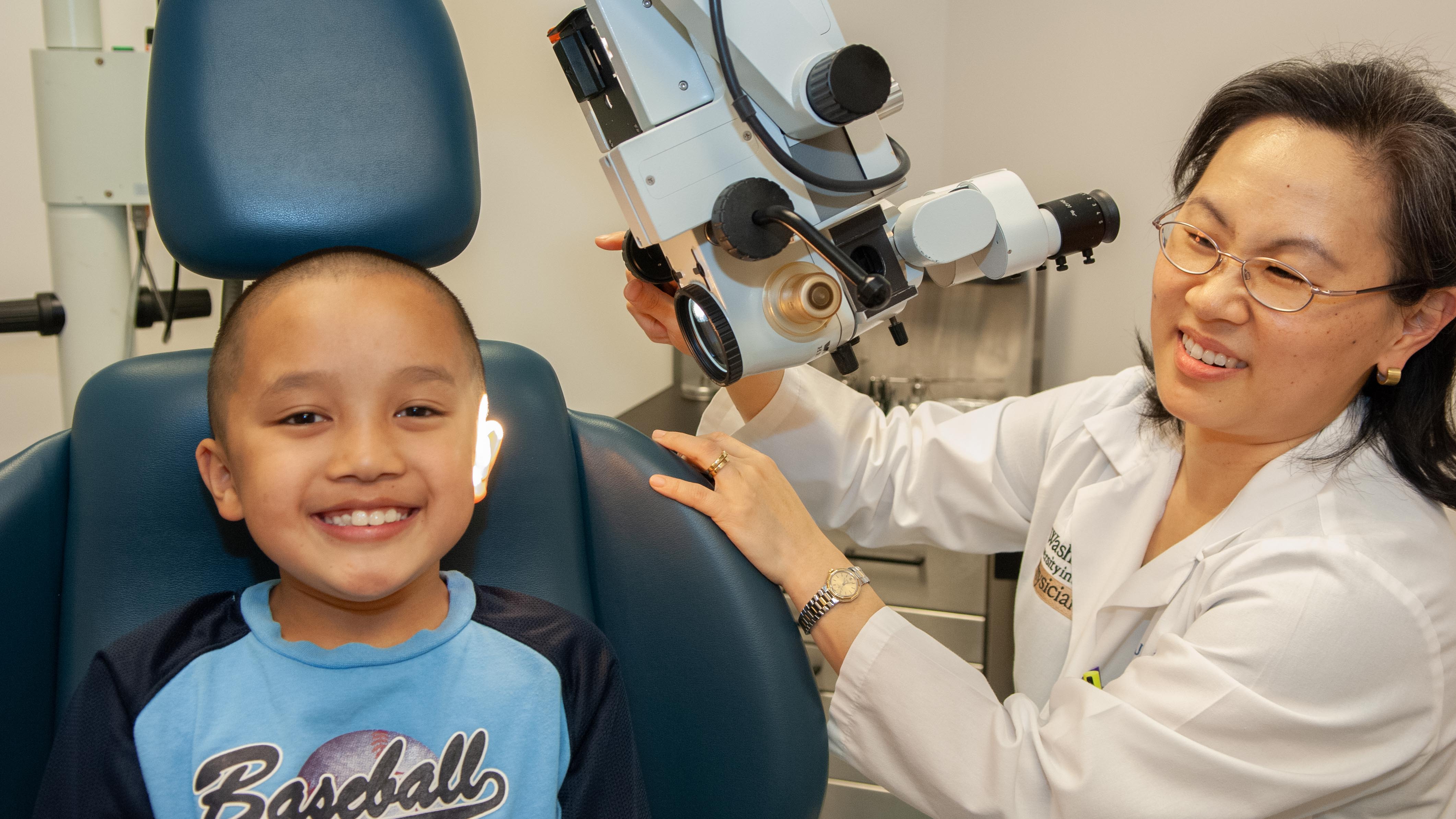
Principal Investigator: Judith E. C. Lieu, MD, MSPH
Research Coordinator: Banaan Ead
Our current research focuses on the effects and consequences of hearing loss in children, especially unilateral hearing loss (hearing loss in one ear).
We use clinical epidemiology research methods and collaborate with colleagues in neuroscience, psychology, and auditory science to investigate speech-language, cognition, educational effects, executive functioning, and quality-of-life in children with hearing loss. We hope to identify factors that can lead to targeted earlier intervention and better educational performance or language skills acquisition in the future. Our current research areas include:
- Hearing Device use and Disease-specific QOL in Children with Hearing Loss
- Validation of Tablet Audiometry for Diagnostic Use in Pediatric Patients
- Barriers to cisplatin ototoxicity monitoring and impact of cisplatin toxicity to quality of life
- Evaluation and treatment of sleep disordered breathing in patients with craniofacial abnormalities
Other topics in pediatric otolaryngology are also investigated depending on the interest of the resident or student working with the Lieu Lab at WashU Medicine.
Research projects
Current research projects actively recruiting subjects
We are currently looking for children ages 7-17 years old who have hearing loss in one or both ears and will be fitted with a new hearing device, whether for the first time or to replace an old one. Participants are asked to complete a validated hearing-related QOL instrument, called the HEAR-QL, before and 1 month after the new device is fitted. We are currently in the process of measuring the minimum clinically important difference (MCID) for this questionnaire. We hope that measuring the MCID will make it a more useful QOL survey for use in clinical and research settings.
We are currently looking for children ages 4-17 years old with normal hearing to test the use of a tablet-based audiometer (hearing measuring device). In addition to playing a hearing game to test hearing, the participant will be asked to complete a short questionnaire to see if it can be used to screen for children with hearing loss. We hope to both validate the use of the tablet audiometer to be used in settings outside the medical center, such as in schools or clinics, and to validate the use of a short questionnaire that can identify hearing loss without the use of a medical device.
Interested in participating?
If you are interested in learning more about our studies, please contact:
Banan Ead, Research Patient Coordinator
Email: eadbanan@wustl.edu
Phone: 314-454-2197
Current research projects not recruiting subjects
This study used a qualitative approach to identify barriers to monitoring for ototoxicity (hearing loss, tinnitus, balance problems) in patients who had received cisplatin to treat a malignancy. The qualitative study has been completed, and the creation of a ototoxicity-related QOL survey is being developed for planned validation in this patient population.
This study is a retrospective study of children who have been followed in the Cleft and Craniofacial clinic at St. Louis Children’s Hospital and have a concern for sleep-disordered breathing (SDB) or obstructive sleep apnea (OSA). Participants’ charts are reviewed for the diagnostic and follow-up assessments in children with craniofacial abnormalities. The goal is to develop better evidence-based guidelines for evaluating and treating SDB/OSA in these patients.
Previous work
We have developed a series of validated hearing-related QOL measures, the HEAR-QL, for children to self-report, anchored from the results of children with normal hearing. We have now validated self-reported instruments for older children and a parent-proxy version for younger children (ages 2-6 years, 7-12 years, and 13-18 years).
These studies showed children with hearing loss suffer significant decrements in hearing-related QOL regardless of severity or laterality of hearing loss (unilateral vs bilateral, mild to profound) compared to children and adolescents with normal hearing. The HEAR-QL is now used worldwide in studies, including international clinical trials, and clinically. It has been translated into more than 20 languages and dialects.
If you are interested in obtaining these any of these assessments, please visit the Office of Technology Management (OTM) to complete a request.
If you are considering or interested in using these assessments and would like to reach us directly, please contact us for further information.
Publications
Contact us
Lieu Lab at WashU Medicine
Department of Otolaryngology – Head & Neck Surgery
MSC 8115-029-08
WashU Medicine
660 S. Euclid Ave.
St. Louis, MO 63110-1010