Items
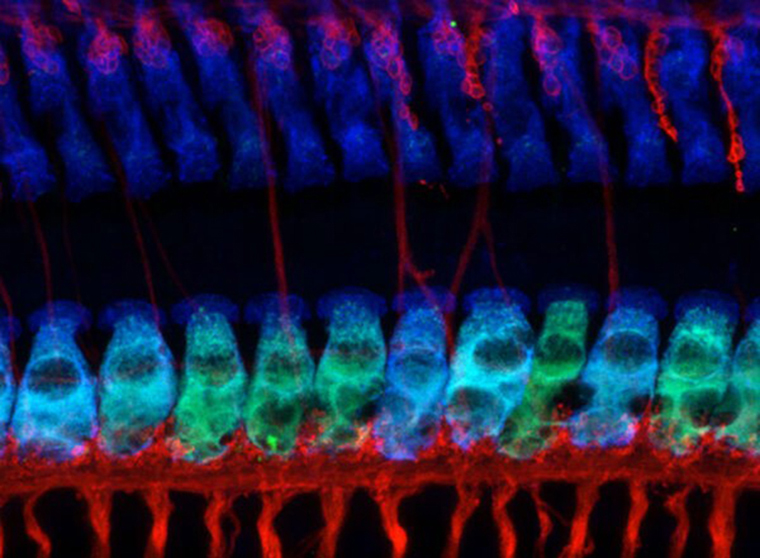
Rutherford Lab
Sensory encoding and excitotoxicity
The Rutherford Lab is focused on sensory encoding. We study how sound is transduced by the inner ear into action potentials in the auditory nerve through mechanisms of synaptic transmission. During overexposure to sound, excessive release of glutamate from the sensory receptors (inner hair cells) drives an excito-toxic response resulting in synaptic disintegration and auditory nerve degeneration. Our experiments are testing hypotheses about the mechanisms of glutamatergic excitotoxicity in the cochlea.

Sensory Regeneration Lab
Sensory transduction in the inner ear is mediated by mechanoreceptive hair cells. Unfortunately, hair cells can be injured or lost after exposure to noise, ototoxic drugs, or as part of normal aging. Such injury typically results in permanent hearing loss and/or disequilibrium. Our research focuses on the biological mechanisms that regulate the production of hair cells and the survival and growth of their afferent neurons.
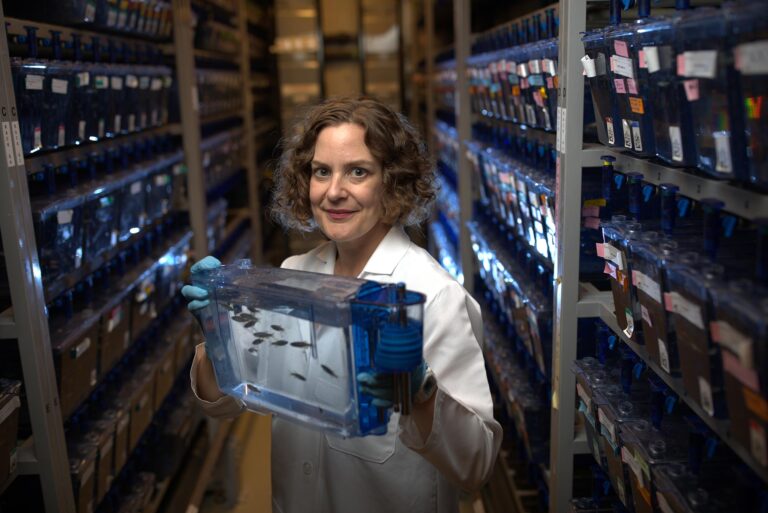
Sheets Lab
Our laboratory's goals are to understand how specific pathological changes occur in hair cells exposed to noise by defining the dynamic cellular processes that lead to hair-cell synapse loss and hair-cell death. We investigate these questions using zebrafish as a model for human hearing and deafness.
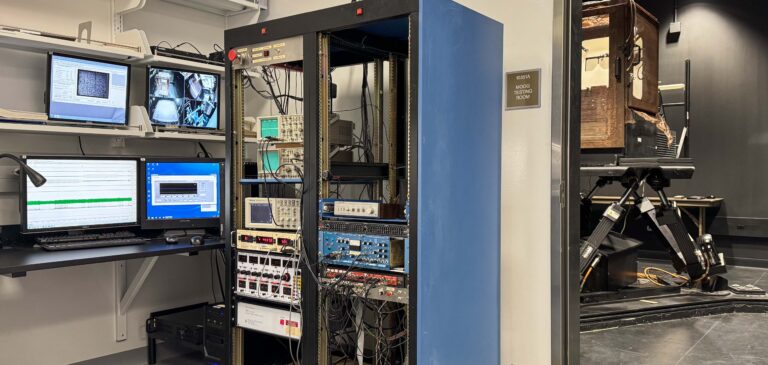
Yakusheva Lab
The goal of our research is to study the role of the vestibulo-cerebellum in motor control, balance and spatial navigation. Currently, our lab is testing the hypothesis that the floccular lobe computes a forward model (predictive model) of the eye movement from vestibular and efferent copy information, and that the posterior vermis computes an estimate of our heading (translation) and orientation in space from semicircular canals and otolith information. Our experimental techniques include single unit recordings, pharmacology, behavioral neuroscience, mouse neurogenetics, histochemistry and computational modeling.